
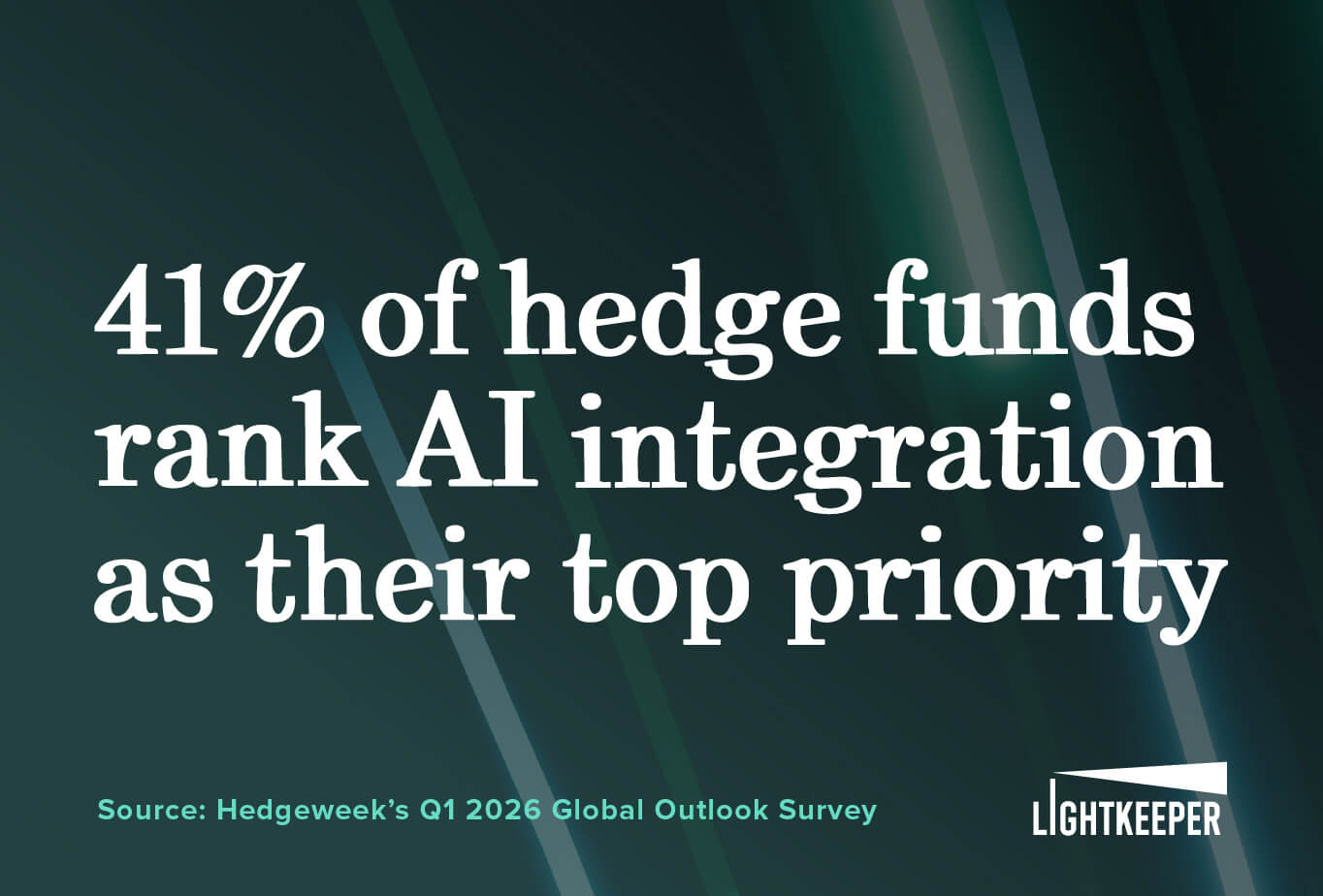
According to Hedgeweek’s Q1 2026 Global Outlook Survey of more than 100 hedge fund managers, 41% now rank AI integration as their biggest priority for the year, surpassing both cost optimization and talent acquisition. Nearly a third report significant AI integration already underway across research and trading.
But a closer look reveals a critical blind spot.
The promise of large language models is straightforward: ask a question in plain English and get an answer in seconds. The challenge is that the questions that matter most to a portfolio manager, positions, attribution, and risk exposures, live in proprietary systems that general-purpose AI tools cannot easily access or verify.
When AI works from disorganized or inconsistent data, the result isn’t just an inconvenience. A plausible but incorrect number in a risk report or investor letter is a material, and potentially career, risk.
This highlights an important distinction discussed in the article: generative AI can produce useful insights, but investment teams still rely on deterministic analytics when it comes to their own portfolio data. For market commentary or macro analysis, approximate answers may be acceptable. For your own book, they are not.
The firms best positioned to benefit from AI may not be the ones deploying the most sophisticated models, but those that have invested first in clean, validated, well-structured data infrastructure.
Read the full Hedgeweek article: Hedge funds rank AI as their number-one priority — but experts say they may be ignoring this blind spot.
